Business workflow
Define the user, decision, action, exception, and outcome before selecting technology.
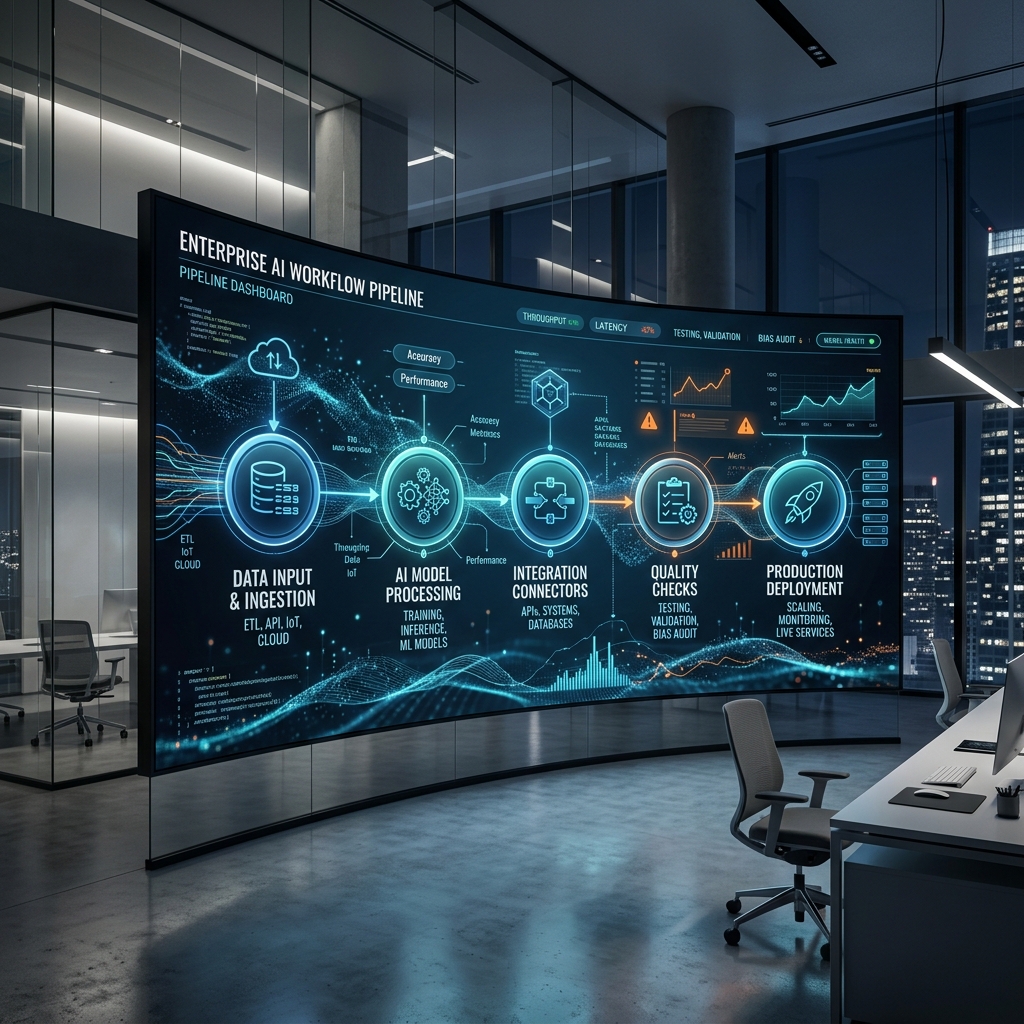
A useful model response is only one part of an enterprise AI system. The workflow must retrieve trusted context, use approved tools, handle exceptions, respect permissions, produce measurable output, and remain supportable after launch.
Define the user, decision, action, exception, and outcome before selecting technology.
Choose models, retrieval, orchestration, memory, tool access, and human review based on the work.
Connect applications, documents, databases, APIs, identity, events, and collaboration channels.
Set evaluation criteria, permissions, audit trails, release gates, fallback paths, and cost controls.
Design the workflow so employees and customers can understand, trust, and use it.
Monitor quality, latency, cost, failures, usage, and business outcomes after release.
AI engineering capabilities
Engage AAIC for a focused workflow, an AI-enabled product, or the production foundation across a broader program.
 AI Product Development
Build copilots, customer experiences, internal tools, and AI-native product capabilities with measurable user outcomes.
Explore Now
AI Product Development
Build copilots, customer experiences, internal tools, and AI-native product capabilities with measurable user outcomes.
Explore Now
 Agentic AI Development
Design agents that plan, retrieve context, use tools, coordinate work, and involve people when judgment is required.
Explore Now
Agentic AI Development
Design agents that plan, retrieve context, use tools, coordinate work, and involve people when judgment is required.
Explore Now
 RAG and Knowledge Systems
Ground AI in permission-aware documents, databases, knowledge bases, and operational records with citations.
Explore Now
RAG and Knowledge Systems
Ground AI in permission-aware documents, databases, knowledge bases, and operational records with citations.
Explore Now
 Document Intelligence
Extract, classify, compare, summarize, validate, and route complex business documents.
Explore Now
Document Intelligence
Extract, classify, compare, summarize, validate, and route complex business documents.
Explore Now
 Enterprise AI Integration
Connect AI workflows to CRM, ERP, ITSM, cloud, data, identity, collaboration tools, and internal APIs.
Explore Now
Enterprise AI Integration
Connect AI workflows to CRM, ERP, ITSM, cloud, data, identity, collaboration tools, and internal APIs.
Explore Now
 AI Evaluation and Operations
Establish evaluation datasets, RAG quality checks, regression gates, observability, and production support.
Explore Now
AI Evaluation and Operations
Establish evaluation datasets, RAG quality checks, regression gates, observability, and production support.
Explore NowThe strongest AI opportunities are not defined by a model. They are defined by work that is manual, slow, expensive, inconsistent, or difficult to scale.
Offer memorandum analysis, financial extraction, onboarding documents, claims, compliance, and knowledge workflows.
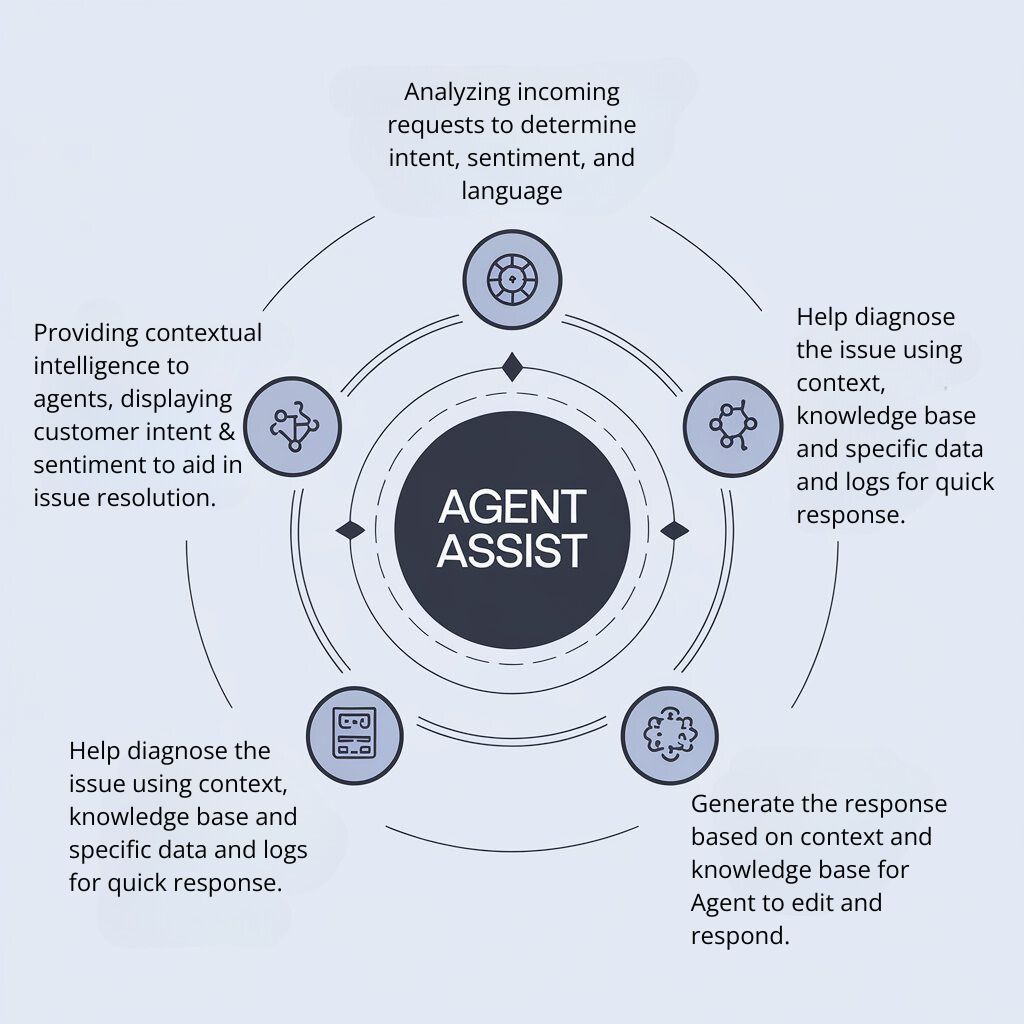
Agent assist, customer service, employee support, onboarding, guided actions, and case summaries.

CIO reporting, campaign intelligence, sales signals, risk summaries, and operational recommendations.
Selected work
AI Agent Assist for Insurance Support
Real-time transcription, scenario identification, guided actions, records, and summaries inside a support workflow.
Explore Now
 Secure Enterprise Document Search
Permission-aware RAG and contextual search across large private document repositories.
Explore Now
Automated Financial Data Extraction
A traceable document workflow that reduced processing time while preserving review and control.
Explore Now
Secure Enterprise Document Search
Permission-aware RAG and contextual search across large private document repositories.
Explore Now
Automated Financial Data Extraction
A traceable document workflow that reduced processing time while preserving review and control.
Explore NowAn enterprise AI development company builds AI products, agents, copilots, RAG systems, document workflows, and automation connected to business data, applications, APIs, permissions, and operating controls.
A proof of concept tests feasibility. Custom development adds the integrations, evaluation, security, governance, experience, observability, and ownership required for production use.
Yes. We build around existing cloud platforms, models, data systems, enterprise applications, collaboration tools, identity controls, and delivery standards.
We evaluate business value, process pain, data readiness, integration complexity, risk, user adoption, and whether a measurable production outcome can be owned.
Yes. We assess the prototype, identify production gaps, define the target architecture, and deliver the integration, governance, quality, deployment, and operating work.
Talk to expert
Share your details and the Applied AI Consulting team will get back to you as soon as possible.