Who it is for
Product, business, technology, and engineering teams that need to move from product idea or feature requirement into working software.
Our services
AAIC helps teams move from product idea to working software with product discovery, UX, rapid prototyping, application development, DevOps, quality, and AI-assisted engineering practices.
 Product Discovery and Roadmap Building
Clarify customer needs, product goals, feature priorities, risks, and the delivery roadmap before engineering begins.
Explore Now
Product Discovery and Roadmap Building
Clarify customer needs, product goals, feature priorities, risks, and the delivery roadmap before engineering begins.
Explore Now
 UX/UI Design
Design intuitive enterprise interfaces around user workflows, accessibility, information architecture, and adoption.
Explore Now
UX/UI Design
Design intuitive enterprise interfaces around user workflows, accessibility, information architecture, and adoption.
Explore Now
 Rapid Prototyping
Use AI-assisted prototyping, design systems, and reusable engineering patterns to validate ideas before full investment.
Explore Now
Rapid Prototyping
Use AI-assisted prototyping, design systems, and reusable engineering patterns to validate ideas before full investment.
Explore Now
 Application Development Service
Design, build, test, and deploy secure web, mobile, cloud-native, API, data, and AI-enabled product capabilities.
Explore Now
Application Development Service
Design, build, test, and deploy secure web, mobile, cloud-native, API, data, and AI-enabled product capabilities.
Explore Now
 DevOps Implementation
Connect CI/CD, infrastructure, environments, release automation, observability, and operational readiness around the product.
Explore Now
DevOps Implementation
Connect CI/CD, infrastructure, environments, release automation, observability, and operational readiness around the product.
Explore Now
 Quality Testing
Apply test automation, performance validation, security checks, AI-assisted test generation, and release confidence gates.
Explore Now
Quality Testing
Apply test automation, performance validation, security checks, AI-assisted test generation, and release confidence gates.
Explore NowAI-assisted product delivery
AI coding tools can compress discovery, prototyping, development, test creation, refactoring, and documentation. Enterprise teams still need architecture, code review, security, governance, and delivery ownership.
AI-assisted rapid prototyping
Turn product briefs, user journeys, and workflow ideas into clickable prototypes, proof-of-concept screens, and working MVP slices faster.
AI coding with engineering review
Use AI coding agents for scaffolding, implementation, refactoring, migrations, and documentation while senior engineers own architecture and code quality.
AI-generated tests and quality gates
Accelerate unit, API, UI, regression, and edge-case test creation with automated validation in CI/CD.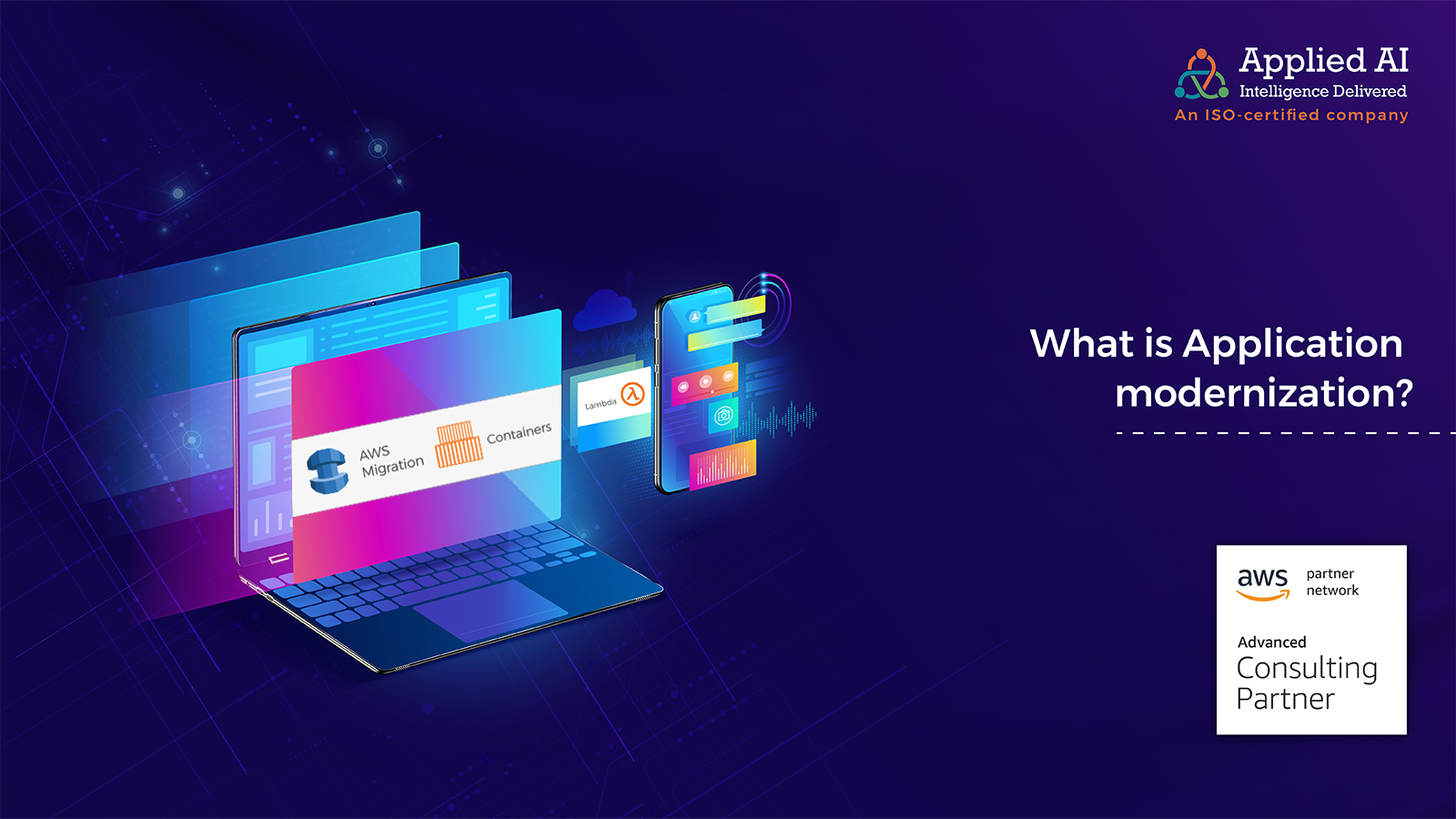 Modernization and refactoring
Use AI-assisted analysis to understand legacy code, identify refactoring candidates, generate migration plans, and modernize safely.
Modernization and refactoring
Use AI-assisted analysis to understand legacy code, identify refactoring candidates, generate migration plans, and modernize safely.AI engineering toolchain
We help teams adopt AI engineering tools as part of a governed SDLC, not as unsupervised code generation. Tool choice depends on codebase context, security posture, deployment model, audit needs, and team workflow.
 Cursor
AI-native editor workflows for codebase-aware development, prototyping, refactoring, and pair programming.
Cursor
AI-native editor workflows for codebase-aware development, prototyping, refactoring, and pair programming. Claude Code
Agentic coding workflows for terminal-based development, issue analysis, code changes, tests, and pull request preparation.
Claude Code
Agentic coding workflows for terminal-based development, issue analysis, code changes, tests, and pull request preparation. OpenAI Codex
Coding agent workflows for implementing features, reviewing code, running tests, and supporting complex engineering tasks.
OpenAI Codex
Coding agent workflows for implementing features, reviewing code, running tests, and supporting complex engineering tasks. Google Antigravity
Agent-first development environment patterns for planning, coding, browsing, and validating software work.
Google Antigravity
Agent-first development environment patterns for planning, coding, browsing, and validating software work. OpenClaw
Open-source local agent patterns for task automation, tool use, and experimental AI engineering workflows.
OpenClaw
Open-source local agent patterns for task automation, tool use, and experimental AI engineering workflows. Governed internal assistants
Internal assistants and GTAF-based workflows that follow enterprise policies, data controls, review gates, and audit needs.
Governed internal assistants
Internal assistants and GTAF-based workflows that follow enterprise policies, data controls, review gates, and audit needs.Product engineering is the discipline of turning business needs, customer workflows, and technology decisions into reliable software. AAIC supports the full path from discovery and UX to architecture, development, DevOps, quality, release, and product iteration.
AI-assisted development can shorten the time from idea to prototype, improve developer throughput, generate tests, and support modernization. Enterprise delivery still needs human engineering judgment, secure architecture, production readiness, and measurable ownership.
We design products around maintainability, extensibility, cloud readiness, integration needs, data flows, observability, performance, and quality automation so teams can keep shipping after the first release.
Success Stories & Case Studies
Related AAIC work across product delivery, platform modernization, cloud-native architecture, quality, and AI-enabled product capabilities.
 An Acclaimed Public Sector Bank is Releasing Apps in Minutes with Amazon ECS
Application modernization and release acceleration case study.
Explore Now
An Acclaimed Public Sector Bank is Releasing Apps in Minutes with Amazon ECS
Application modernization and release acceleration case study.
Explore Now
 A leading insurance MNC saves costs with Infrastructure-as-Code facilitated by AWS Cloud Formation
Cloud native and infrastructure-as-code case study.
Explore Now
A leading insurance MNC saves costs with Infrastructure-as-Code facilitated by AWS Cloud Formation
Cloud native and infrastructure-as-code case study.
Explore Now
 Built a Hybrid Payment Platform from Scratch on AWS ECS
Application modernization case study for a hybrid payment platform.
Explore Now
Built a Hybrid Payment Platform from Scratch on AWS ECS
Application modernization case study for a hybrid payment platform.
Explore Now
 AI Based Sales Assistant Uses NLP and ML Models
AI-enabled product capability using NLP, ML models, and cloud-native engineering.
Explore Now
AI Based Sales Assistant Uses NLP and ML Models
AI-enabled product capability using NLP, ML models, and cloud-native engineering.
Explore NowRecent Blogs
Resources and articles related to this service area.
 Understanding AWS IAM
Identity and access management fundamentals for AWS environments.
Explore Now
Understanding AWS IAM
Identity and access management fundamentals for AWS environments.
Explore Now
 Choosing between SQL and NoSQL; Amazon Aurora and DynamoDB
A practical look at database choices on AWS.
Explore Now
Choosing between SQL and NoSQL; Amazon Aurora and DynamoDB
A practical look at database choices on AWS.
Explore Now
 Kubernetes Security 101: Understanding RBAC and Service Accounts
Kubernetes security concepts for modern engineering teams.
Explore Now
Kubernetes Security 101: Understanding RBAC and Service Accounts
Kubernetes security concepts for modern engineering teams.
Explore NowProduct engineering approach
Product Engineering & Development helps teams design, prototype, build, test, release, and evolve digital products with AI-assisted delivery and enterprise engineering discipline.
Structure product requirements, users, workflows, risks, and success metrics before engineering begins.
Shape the delivery path and prioritize what should be built first, next, and later.
Design the product experience around users and workflows.
Validate ideas quickly with prototypes, MVP slices, and AI-assisted implementation spikes.
Develop the application, APIs, integrations, data flows, and AI-enabled capabilities.
Connect CI/CD, environments, automated tests, security checks, observability, and release readiness.
Product, business, technology, and engineering teams that need to move from product idea or feature requirement into working software.
Unclear requirements, slow prototyping, disconnected design and engineering, legacy code constraints, weak release confidence, and product delivery that needs UX, development, DevOps, AI, and quality practices working together.
The approach helps teams clarify product direction, accelerate prototyping, improve engineering throughput, reduce delivery friction, and connect design, engineering, testing, and operations around the product goal.
Product engineering includes product discovery, roadmap planning, UX and UI design, rapid prototyping, application development, cloud architecture, DevOps, quality engineering, modernization, and production support.
AI-assisted product engineering helps teams accelerate requirements analysis, prototyping, code generation, test creation, refactoring, documentation, and code review while keeping human engineering ownership and enterprise controls in place.
AAIC works with enterprise AI engineering tools and patterns including Cursor, Claude Code, OpenAI Codex, Google Antigravity, OpenClaw, GitHub Copilot, and model-backed internal engineering assistants where they fit the customer's governance model.
AI-generated code should not be treated as production ready without engineering review. AAIC applies architecture review, automated tests, static analysis, security checks, code review, CI/CD gates, and observability before release.
Product engineering is for teams developing new products, modernizing existing platforms, adding AI-enabled features, improving time to market, or scaling product delivery with stronger engineering practices.
Talk to expert
Share your details and the Applied AI Consulting team will get back to you as soon as possible.