Generative Task Automation Framework
Agentic AI Orchestration Engine
GTAF gives enterprise teams a reusable foundation to route intent, coordinate agents, call tools, enforce controls, and execute production workflows in days.
Teams
Slack
API
GTAF
Orchestration Engine
Planner Agent
Tool Agent
Review Agent
Guardrails
HITL
Audit
Jira
ServiceNow
Salesforce
Cloud
Docs
Agentic AI accelerator
A production layer for enterprise AI workflows.
GTAF helps teams move beyond demos by giving every agent a consistent way to understand intent, plan work, call tools, apply controls, and return accountable outcomes.
Multi Agent Orchestration
Coordinate specialized agents with clear task ownership, escalation paths, and reusable skills.
Tool and system access
Connect agents to SaaS, cloud, observability, documents, databases, and internal APIs through governed adapters.
Enterprise controls
Add permissions, approvals, prompt management, audit trails, evaluation, cost tracking, and human oversight.
Reference architecture
Connect. Automate. Orchestrate. Govern.
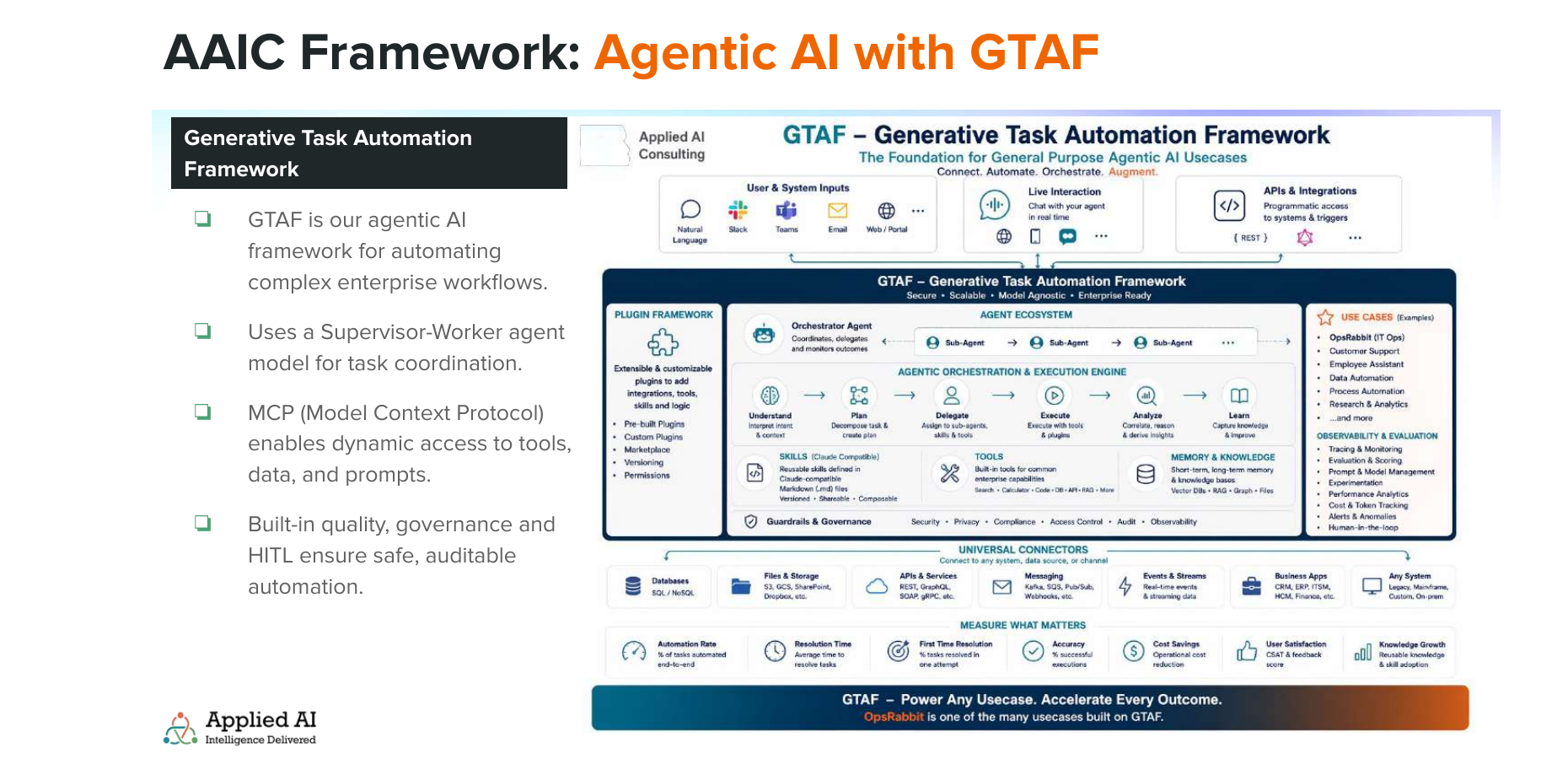
The GTAF architecture brings user channels, agent orchestration, plugins, tools, memory, connectors, guardrails, and measurement into one delivery foundation.
Out-of-the-box integration patterns
Agents that work where your enterprise already works.
GTAF is designed to connect collaboration, ITSM, CRM, cloud, content, databases, observability, and incident operations.
 Teams
Teams
 Slack
Slack
 Jira
Jira
 ServiceNow
 Salesforce
 HubSpot
 AWS
AWS
 Azure
Azure
 OCI
OCI
 GCP
GCP
 Google Workspace
 Google Drive
 OneDrive
 SharePoint
 Confluence
 Oracle
 MySQL
MySQL
 PostgreSQL
 Datadog
 LogicMonitor
 Grafana
 Prometheus
 PagerDuty
 SolarWinds
 Nagios
 N-central
 GitHub
 GitLab
 Bitbucket
 Zendesk
 Okta
Okta
 Snowflake
 MongoDB
 Redis
Redis
 Elasticsearch
 Kubernetes
 Docker
 Box
Box
 Dropbox
 Zoom
Zoom
 Gmail
Gmail
 SAP
SAP
 Workday
Use cases built on GTAF
Start with one useful agent. Expand from there.
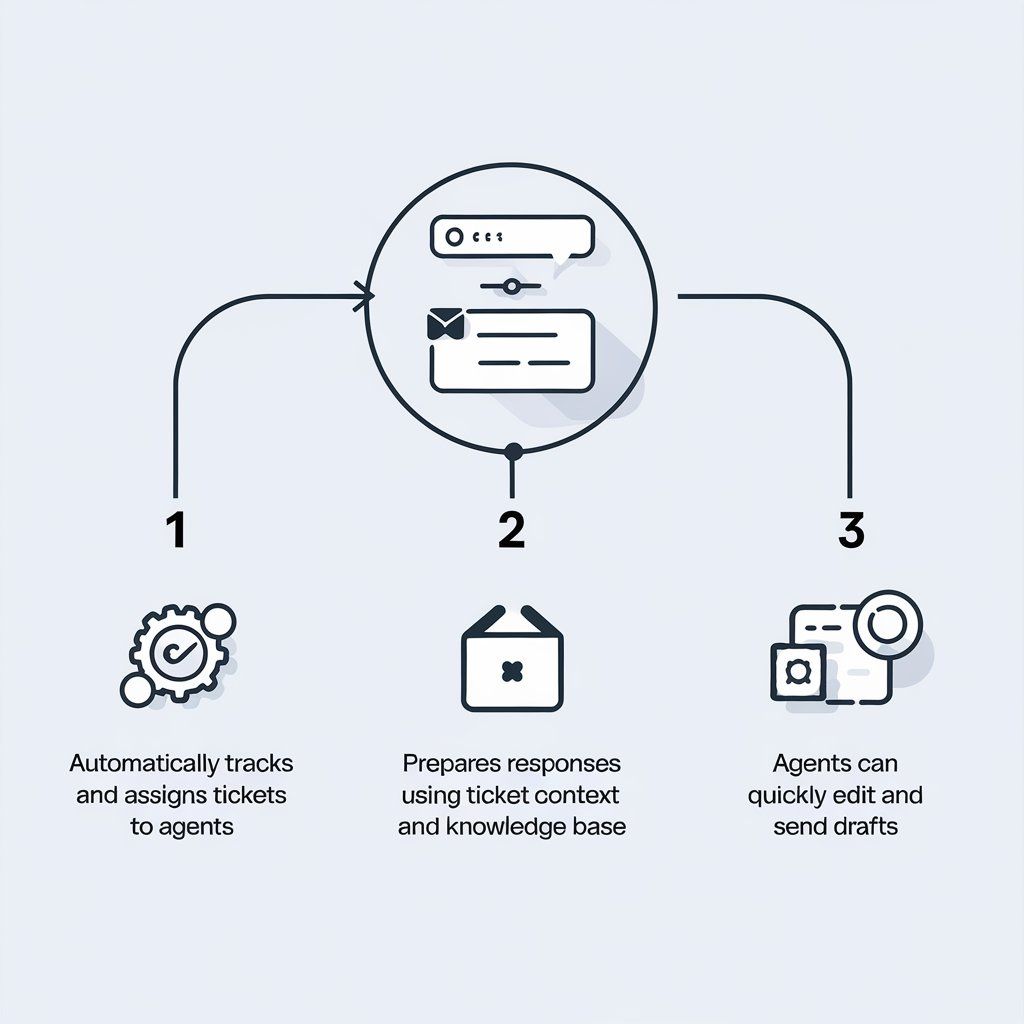
Delivery teams
AI Scrum Master
Summarize standups, identify blockers, update Jira, prepare sprint notes, and keep delivery workflows moving.
Explore agile delivery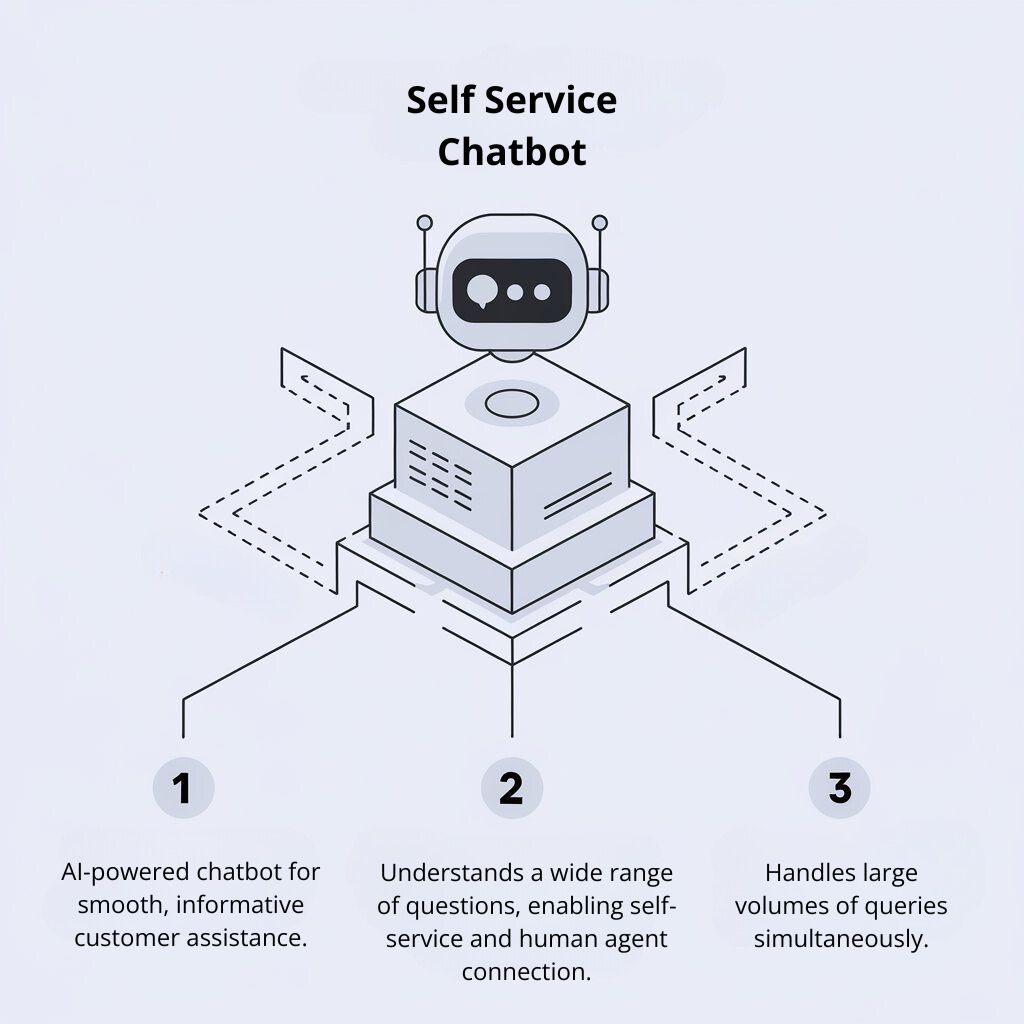
Customer support
AI Customer Bot
Resolve routine questions, search knowledge sources, trigger workflows, and escalate with context when needed.
Explore customer support AI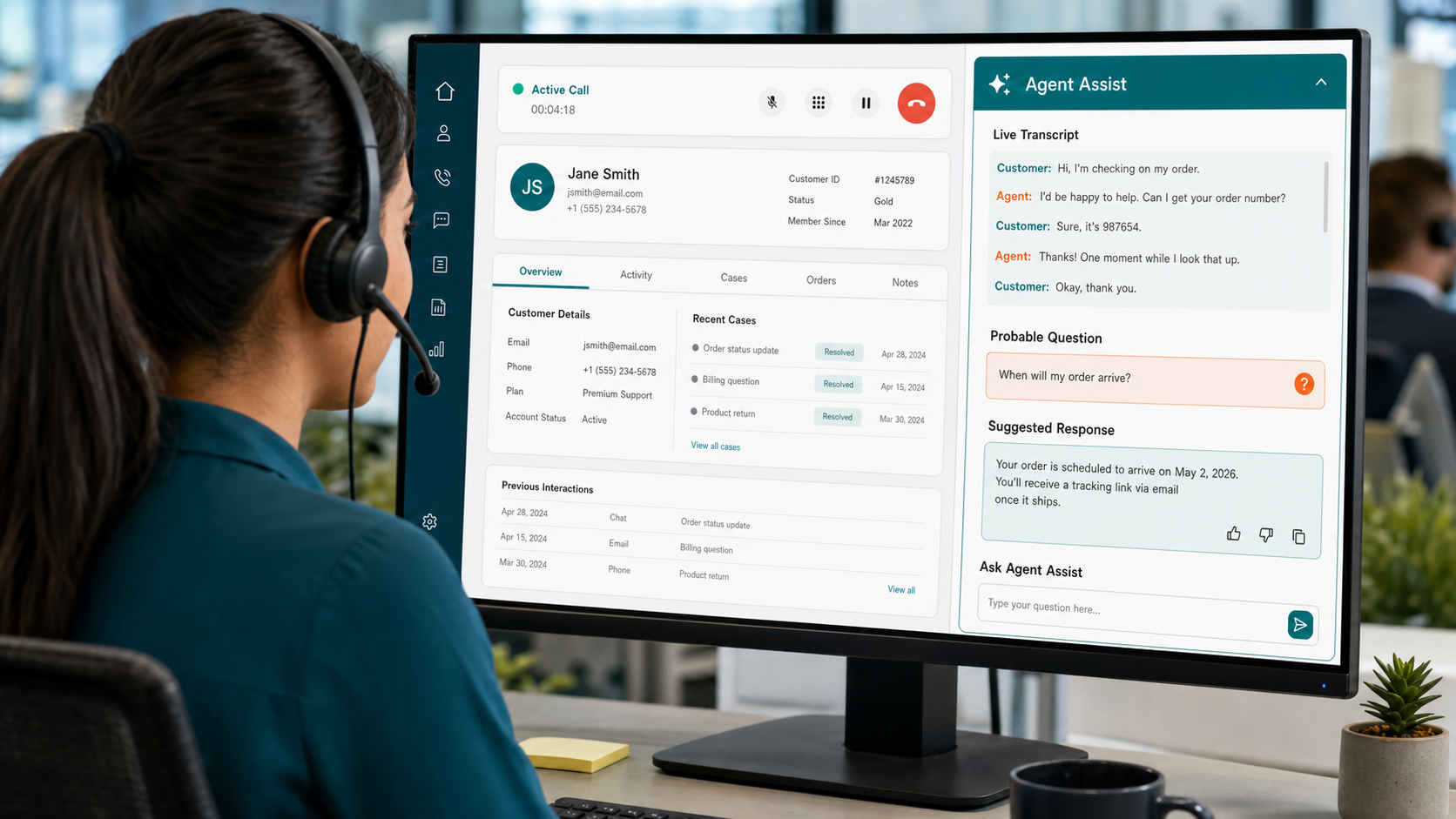
Support operations
AI Agent Assist
Give agents live context, suggested responses, workflow actions, and follow-up summaries inside their support console.
Read the case studyWhy GTAF
Built for teams that need AI to work in production.
Fast first agent
Start with one scoped workflow and reusable adapters so a first agent can reach users in days.
Governed execution
Permissions, approvals, audit trails, and human oversight are part of the execution model.
Observable outcomes
Track task completion, exceptions, latency, cost, feedback, and workflow quality from the start.
Enterprise extensibility
Add connectors, tools, skills, prompts, memory patterns, and team-specific policies as adoption grows.